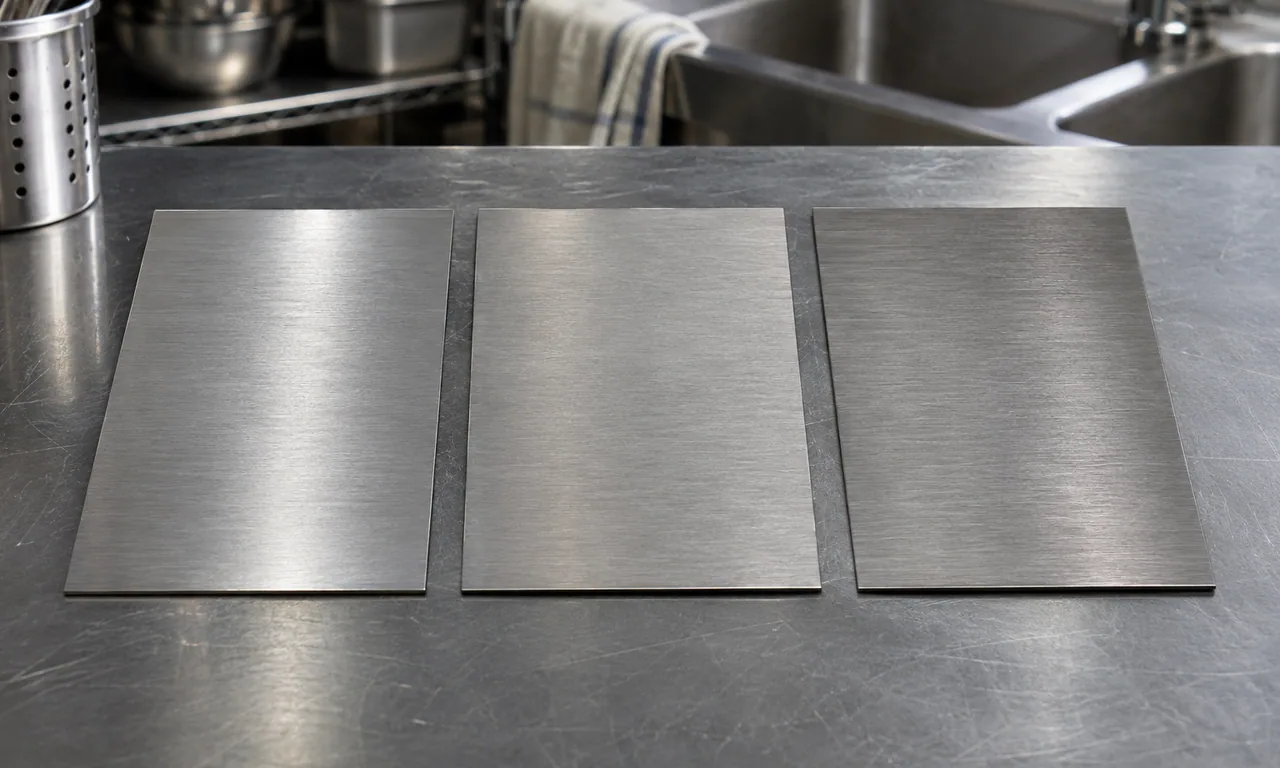

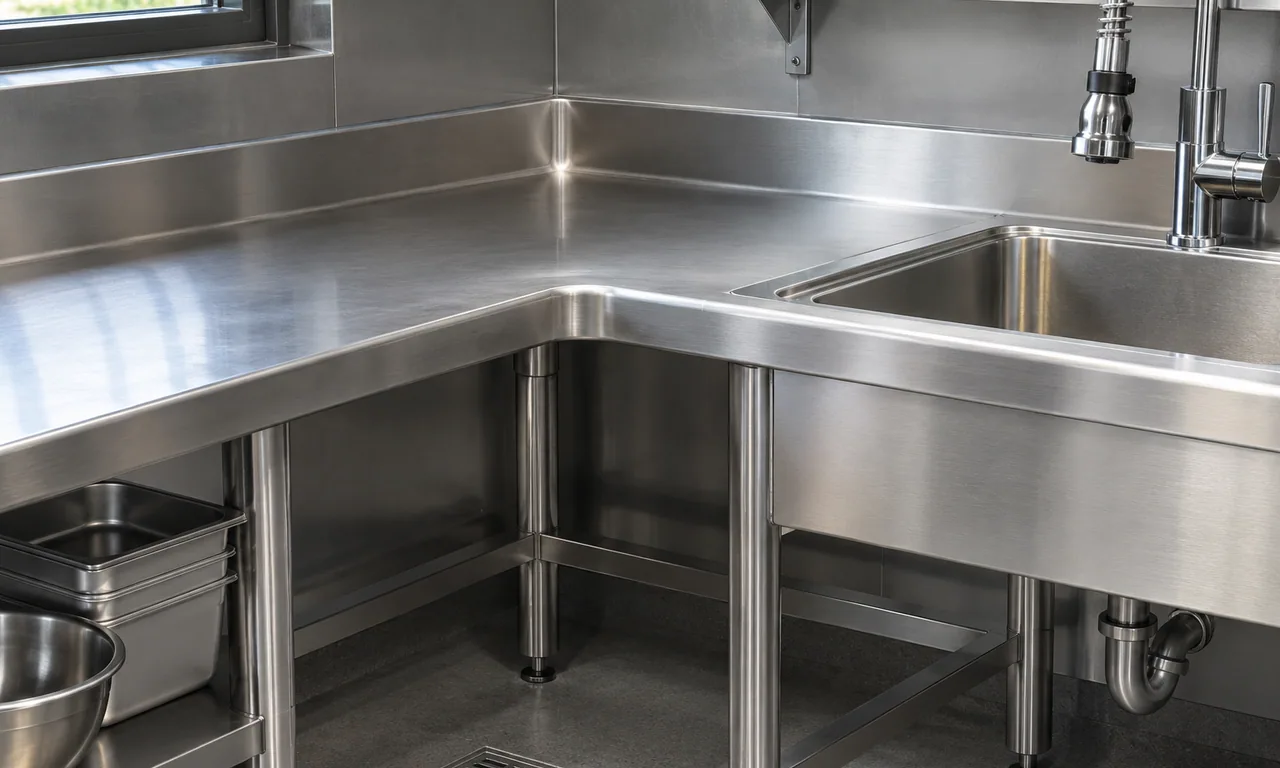
A cleanable surface starts with the design
Commercial kitchens use stainless steel where surfaces need regular cleaning and the equipment must tolerate frequent handling. A smooth, accessible worktop is easier to inspect after wiping than a surface with hidden ledges or debris traps. Look underneath the counter, around the tap and behind the cabinet when reviewing a sample. Corners and joints often decide how much effort maintenance takes.
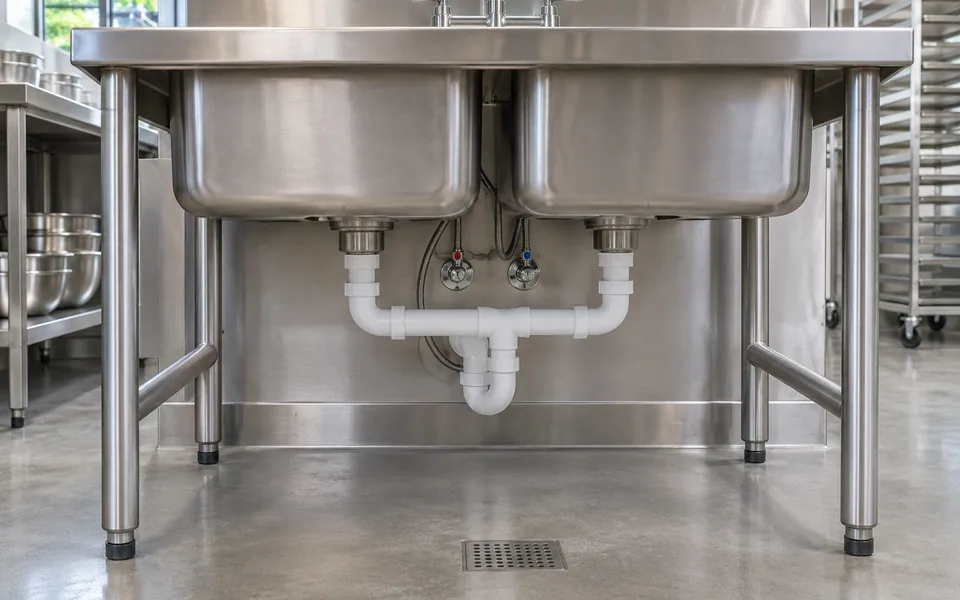
Compare the assembly and its finish
Two worktops made of the same grade can feel different in use. Thickness, folds, stiffeners, welds and frame geometry all influence how the unit responds to a concentrated load. View the complete assembly and ask how it supports the intended equipment. A brushed finish can make some marks less obvious, but it still needs compatible cleaning tools and directions.
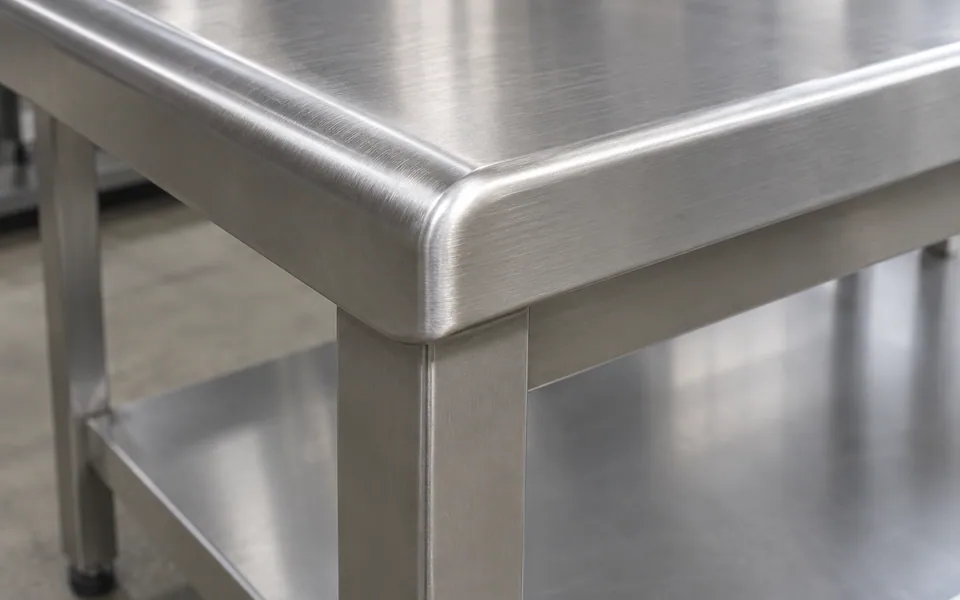
Consider the whole service life
List the cleaners, moisture and deposits the surface will encounter before approving the material. Salt or cleaning residues can accumulate in corners if a station cannot drain or dry. Review access to adjustable feet, standard fittings and removable shelves so the equipment can be maintained without dismantling the surrounding kitchen. A buying decision that accounts for cleaning time, replaceable parts and inspection access is easier to defend than a decision based on appearance alone.