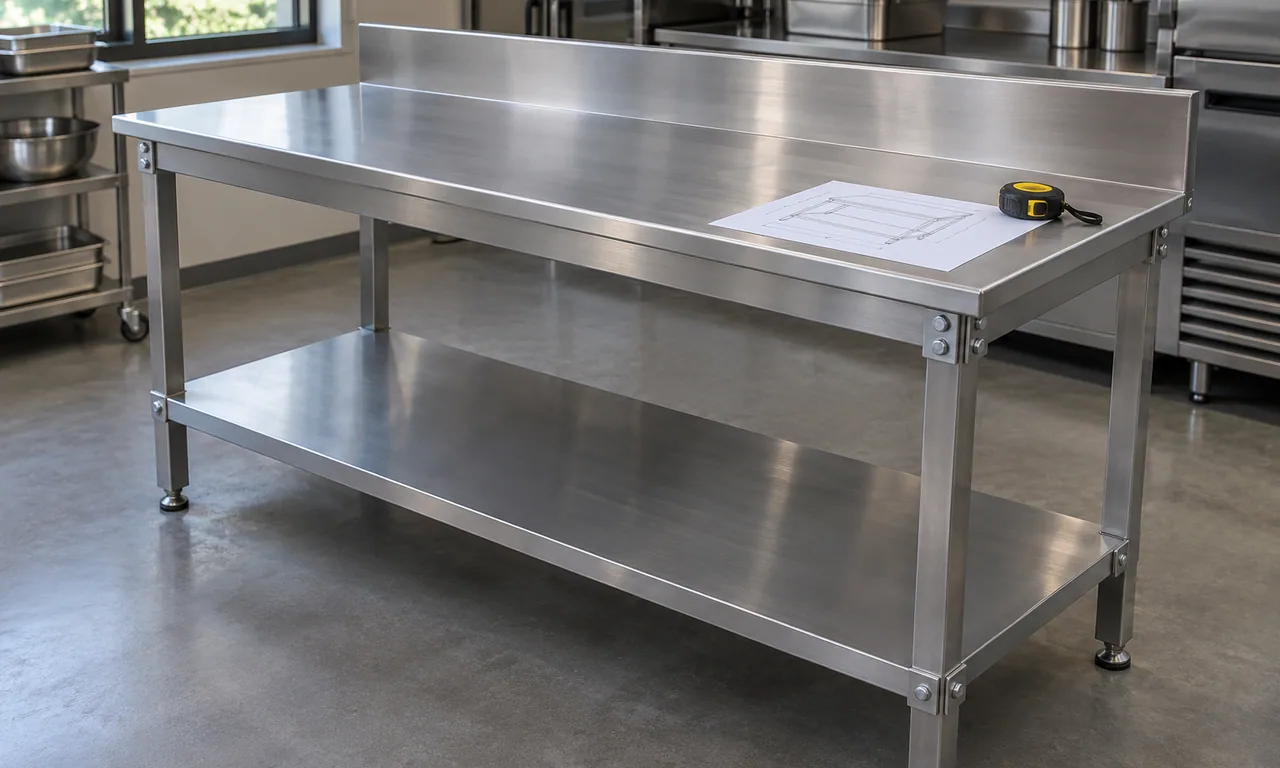

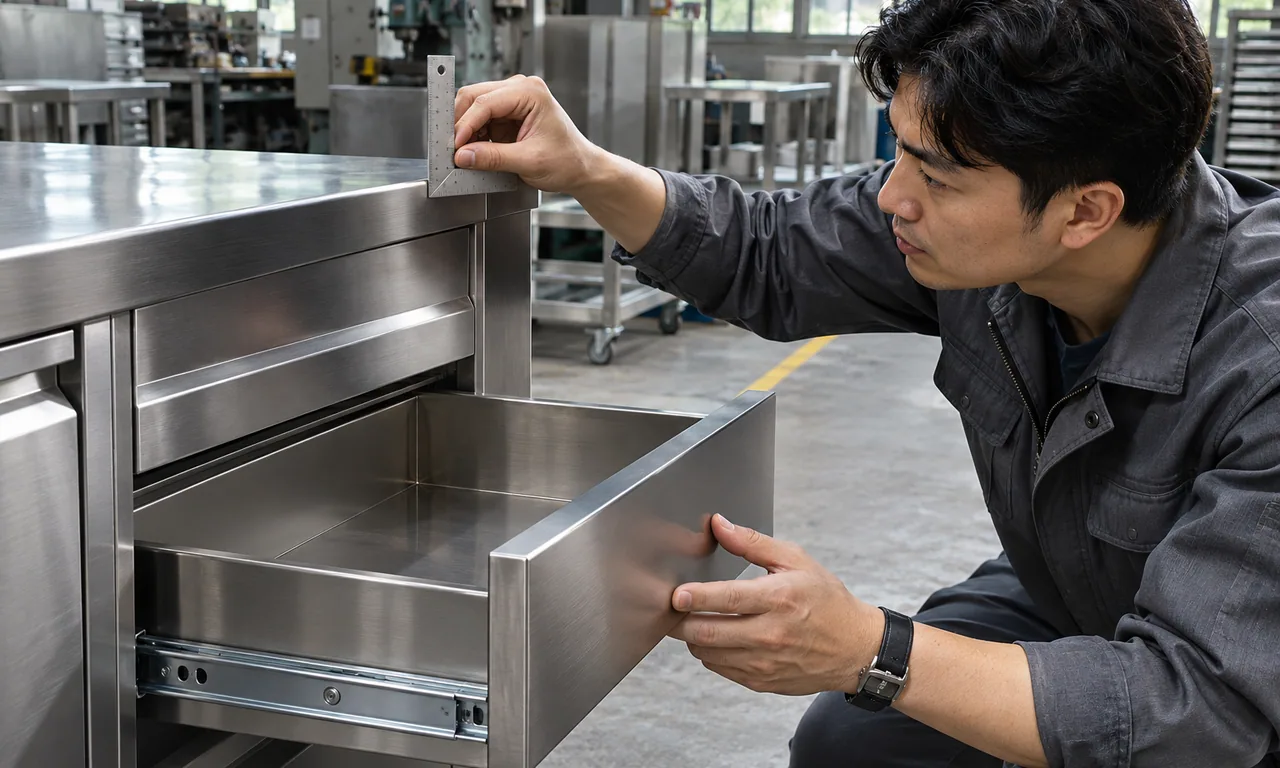
Bring an agreed drawing to the inspection
Identify the exact model, order quantity and drawing revision before opening the first carton. Check that the sample carries the same configuration the quotation describes. Record the tools, measuring points and acceptance tolerances that both sides will use. A measured outside depth is only useful if it is clear whether the backsplash, handle or other projection is included.
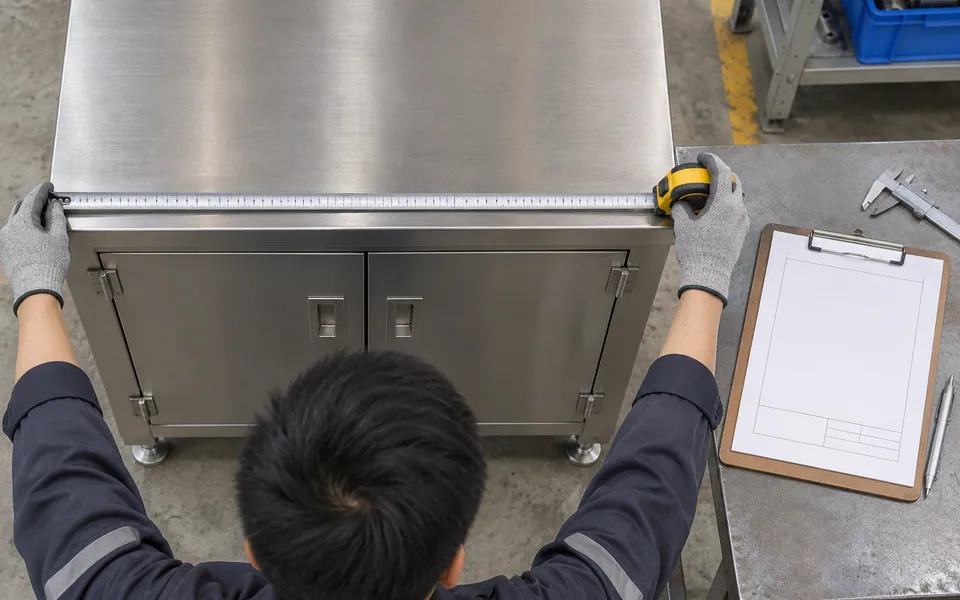
Start with the main dimensions and the spaces that affect installation. Verify the available room beneath a worktop if it has to accept a cart. Check openings for equipment, drain positions for sinks and the direction of cabinet doors. Note any discrepancy on a marked copy of the drawing and photograph the measurement in context.
Look at surfaces and transitions
Inspect under angled light to make scratches, dents and inconsistent grain easier to see. Check edges an operator will touch and corners exposed to repeated cleaning. Look underneath for hard-to-reach gaps or trapped material. At adjacent panels, compare the finish direction and alignment with the approved sample.
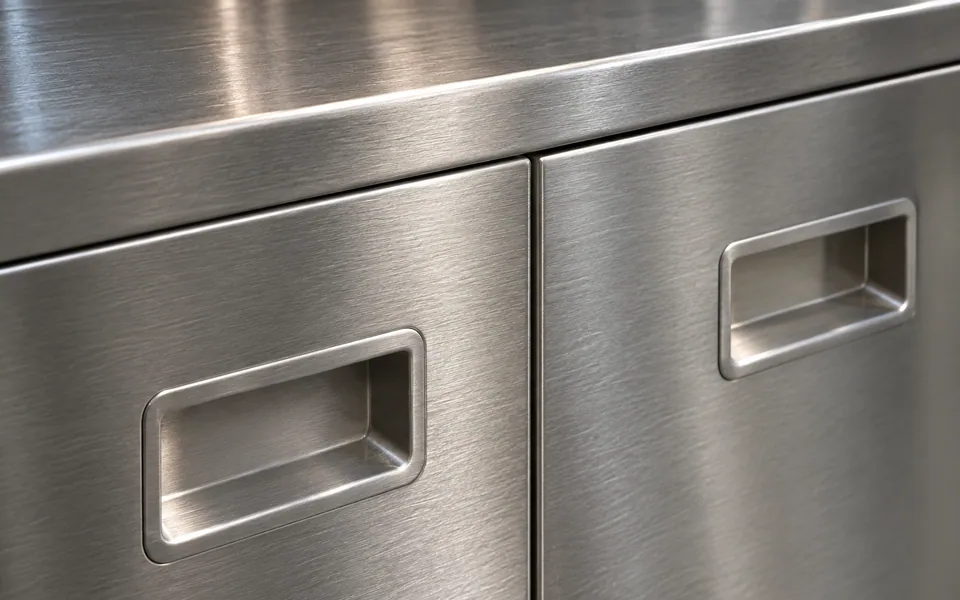
Where weld appearance matters, agree which welds are visible in service and what was approved. Record the location of defects rather than using a general description such as poor finish. Material grade and food-contact suitability require appropriate documentation where specified. A visual inspection can establish condition and workmanship without trying to identify the alloy by its shine.
Operate it like a user
Level the unit on a suitable surface and check stability in its normal working position. Open doors and drawers through their full travel. Look for rubbing, unexpected movement and interference between handles. If the equipment sits next to a wall or another cabinet, recreate the relevant clearance. Check that removable parts can be reached and taken out without disassembling the main unit.
For a caster-mounted item, check movement, locks and the intended direction of travel. If a performance check involves a load, use the previously agreed load and method. Keep the test within safe limits and note whether it was carried out on the production sample or another unit.
Finish with a disposition and receiving plan
Separate the findings that affect fit, safe operation or cleaning from those that are cosmetic. Agree which issues need correction and which are acceptable as supplied. Assign each action to a named owner and request the evidence for closing it before dispatch. For a recurring order, keep the approved sample photos, drawing revision and any agreed deviations together.
Review the packing against the delivery plan. Check edge protection, fastener bags and identification on cartons. Make sure receiving staff know what to open first and how to report transit damage. Capture the carton and equipment condition at receipt so production issues can be distinguished from damage in transport.
For larger orders, agree how many units will be checked and how those units will be selected. Record which checks apply to every unit and which checks can use an agreed sample. This gives the receiving team a clear comparison point if later units differ from the first one.