
Describe the exposure first
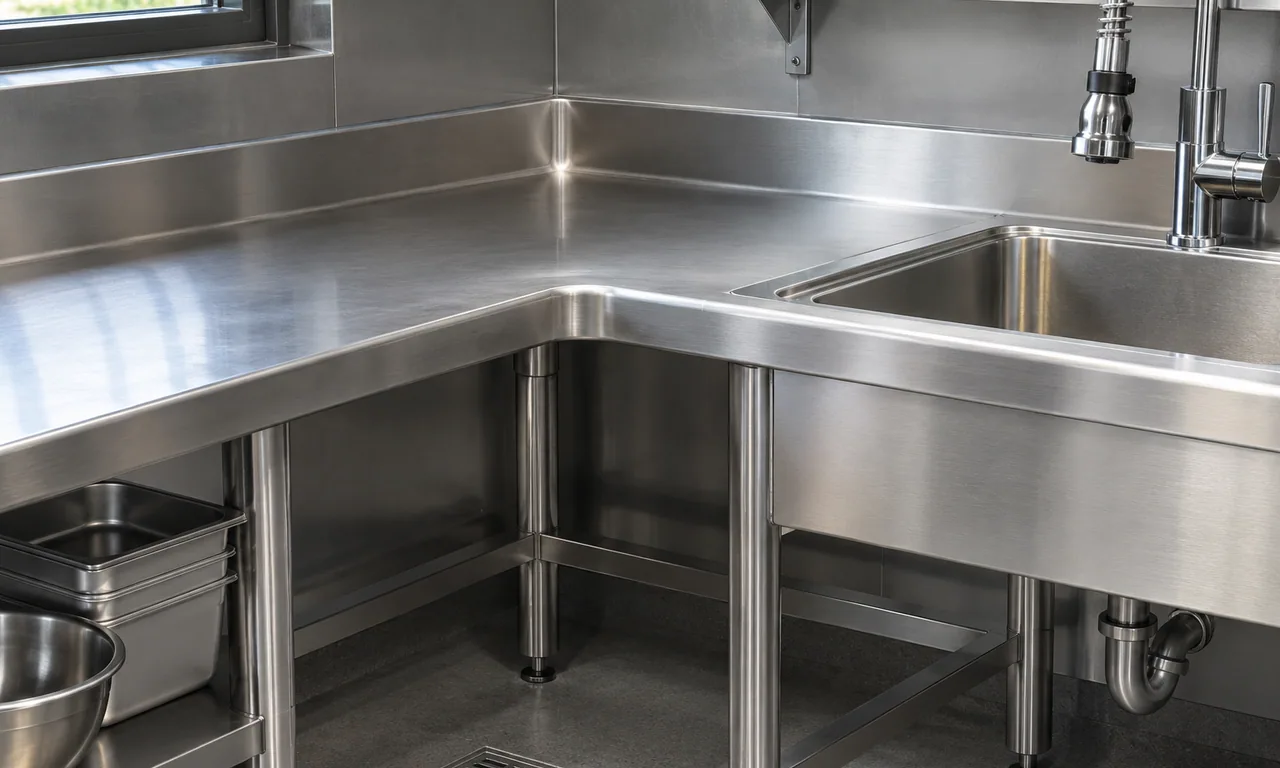
List the conditions the equipment will face during operation and cleaning. Useful details include standing water, salty ingredients, wet storage, the products used for cleaning and how often the surface is rinsed. A dry storage shelf and a sink beside a brine station may look similar at delivery, but they spend their working lives in different environments. Ask the supplier to respond to those conditions for the exact component being purchased.
Put the grade on the drawing
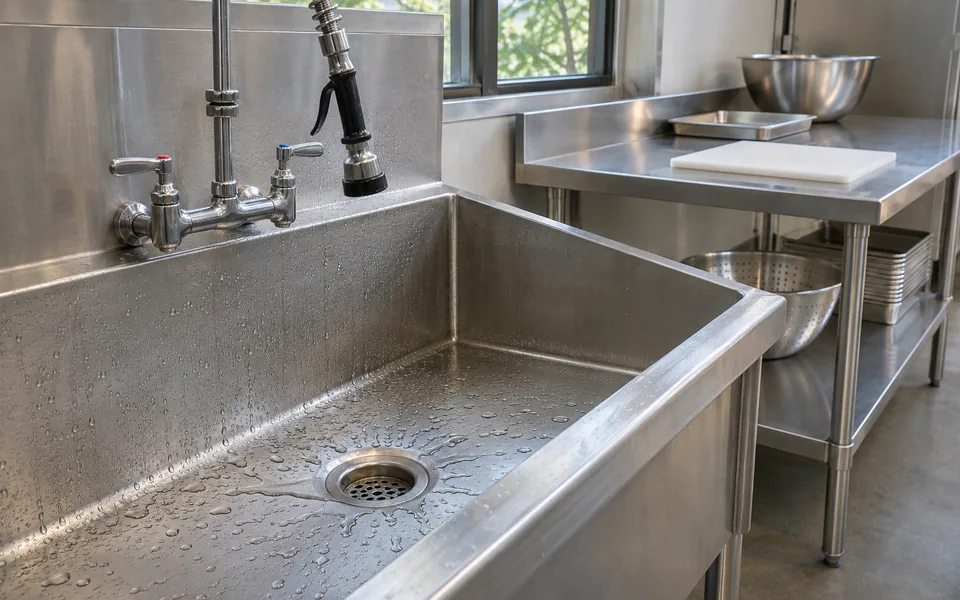
Purchasers often compare common austenitic grades such as 304 and 316. Their suitability depends on exposure and construction. A higher alloy grade may be worth discussing where corrosion risk is more demanding, while the layout and maintenance routine still matter. State which parts require a specified grade. The top, frame, fasteners and hinges may use different materials, and each can influence how the assembly performs.
If documentation matters to the order, agree what the supplier will provide and which parts it covers. A finish sample demonstrates appearance and texture. A grade declaration or relevant material record serves a different purpose. Align the records with the drawing and purchase order before production starts.
Select a finish that fits the routine
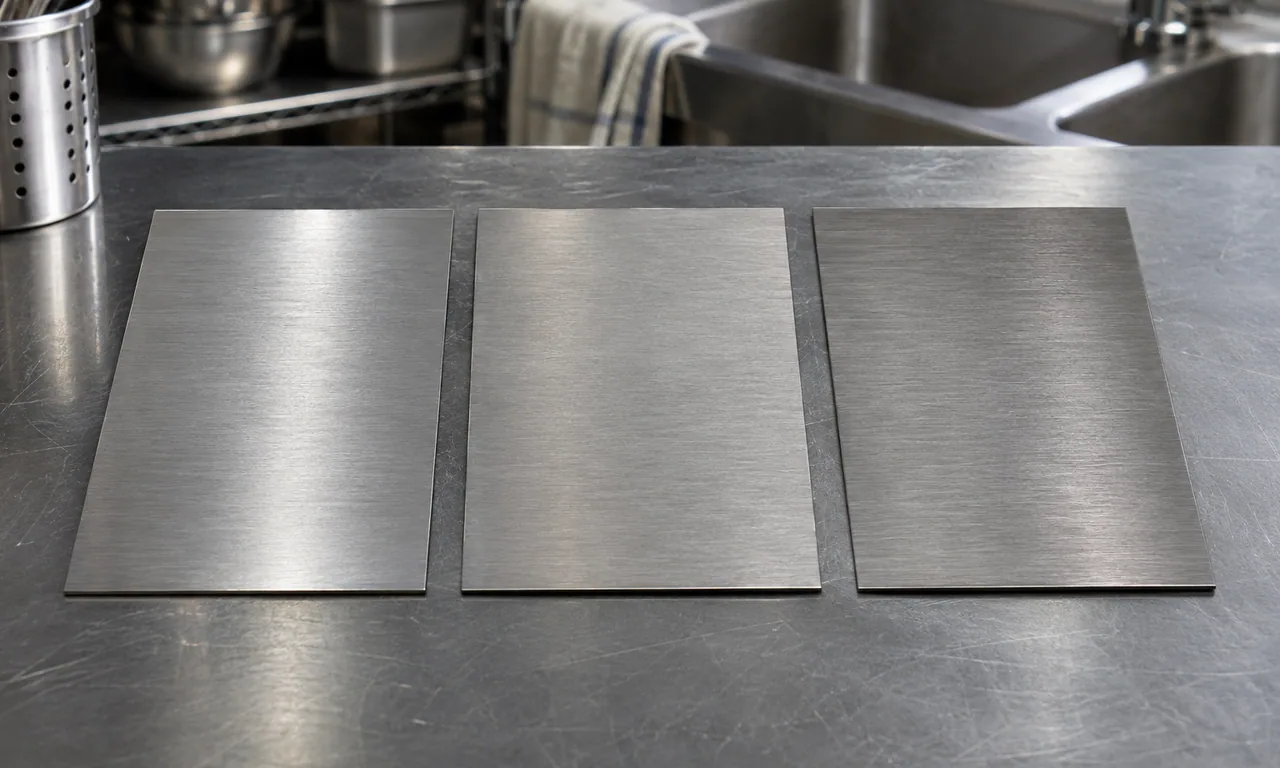
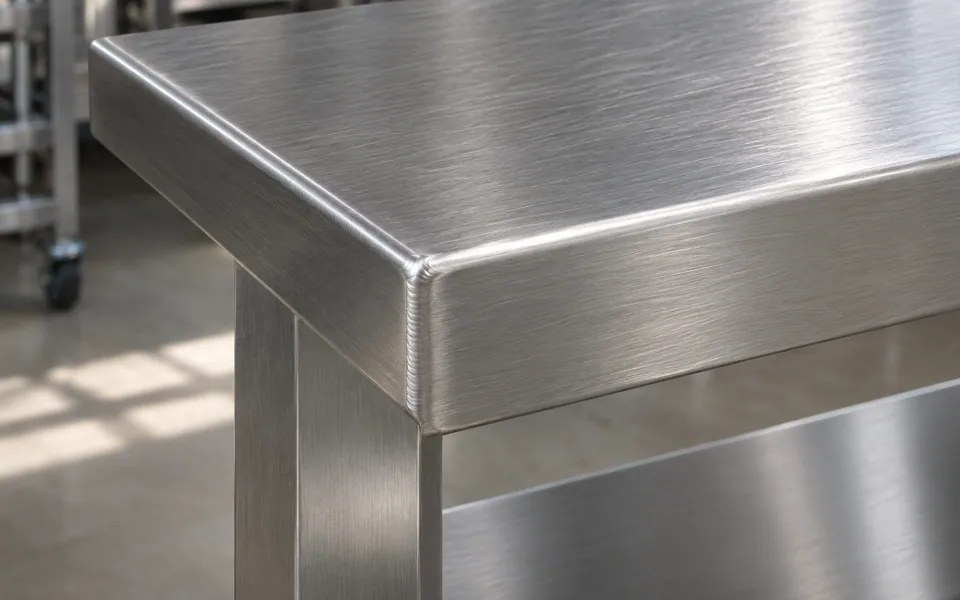
A brushed surface has a visible grain. Confirm its appearance with a sample and specify the grain direction for neighboring panels when visual consistency matters. Look at how joins, corners and welds will be finished. In areas cleaned repeatedly, check for access around bolts, under ledges and behind fittings. Give the supplier the cleaning procedure or products the facility expects to use so it can evaluate compatibility with the proposed finish.
Include installation and follow-up
Check whether moisture can collect against a wall or around unsealed penetrations. Specify drainage and clearance where these affect the work, and make sure any fixings and accessories are appropriate for the intended environment. At acceptance, compare the supplied configuration with the approved drawing and ask the operations team to keep the maintenance instructions accessible.
Record future changes to cleaners and the kinds of ingredients processed at a station. If an issue occurs, document where it appears, the duration of exposure and how the area is maintained. Those details give the supplier more to work with than the material grade alone.
When comparing offers, ask each supplier to list any substitution alongside the specified grade and describe which part it would affect. Review substitutions before authorizing production.