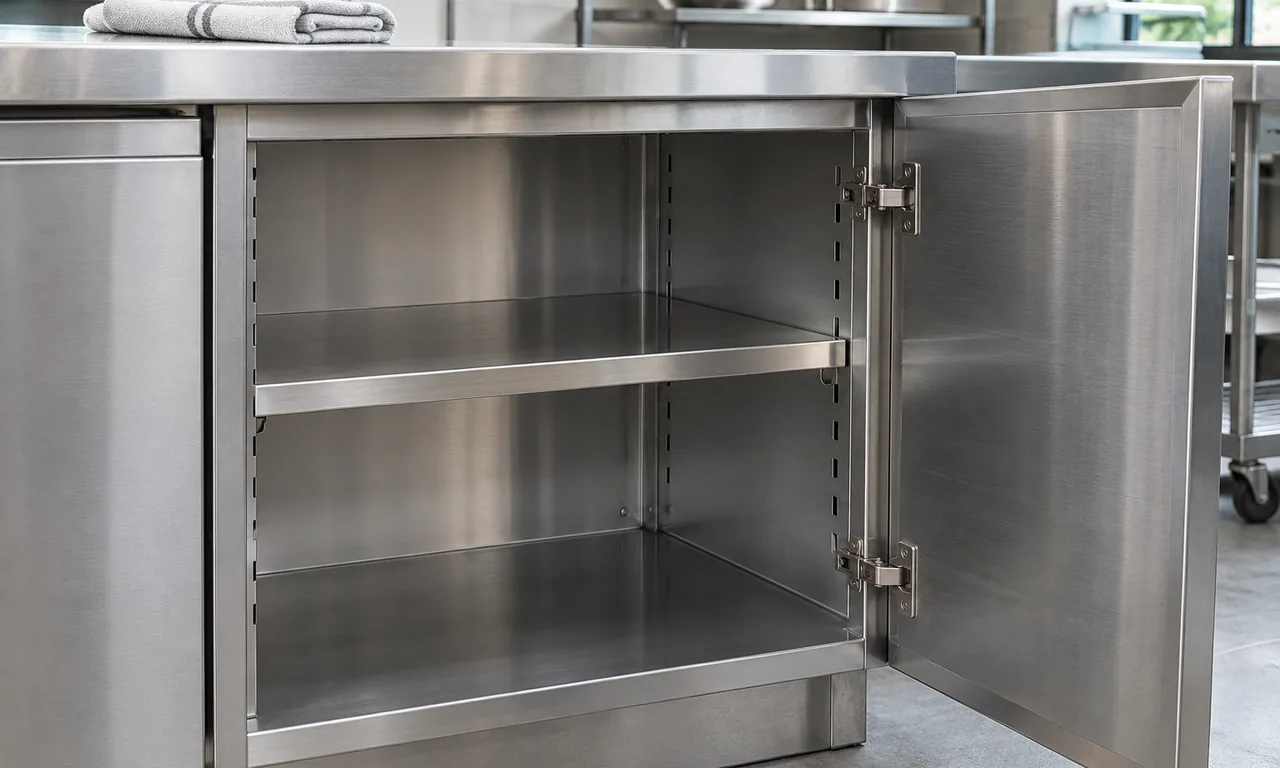

Establish a simple baseline
Record the model, intended loading and finish when a worktable is received. Keep the supplier’s cleaning and assembly instructions with the station. Take photos of the top, feet and lower frame after installation. Later checks will be easier if staff know the original condition and which small variations in finish were accepted.
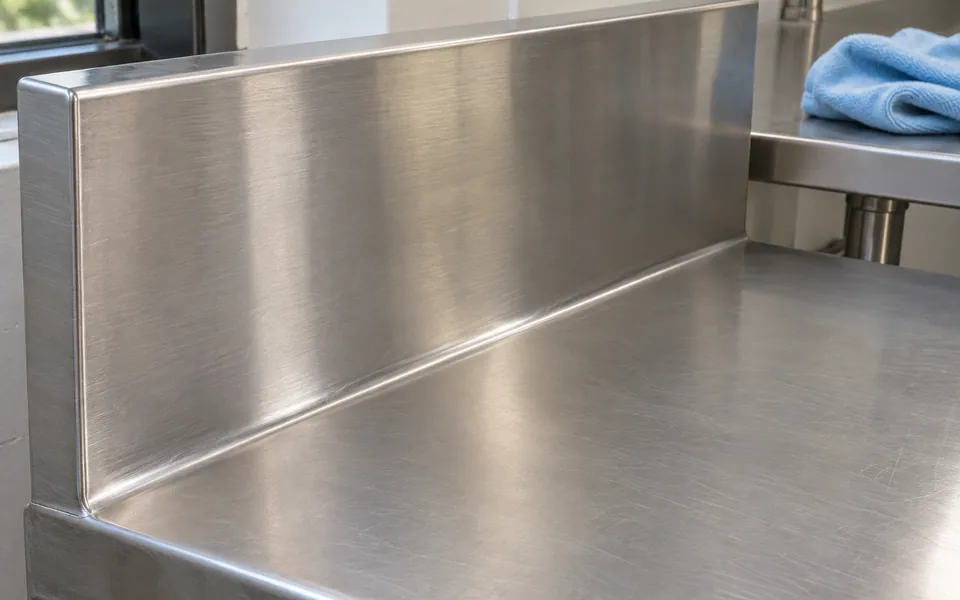
During use, keep wet materials and cleaning residues from sitting in seams or corners. Use tools and cleaning products compatible with the finish. Remove spills promptly and follow the facility procedure for rinsing or drying the surface after cleaning. Pay attention to the front edge and the seam around a backsplash.
Check the load path and fasteners
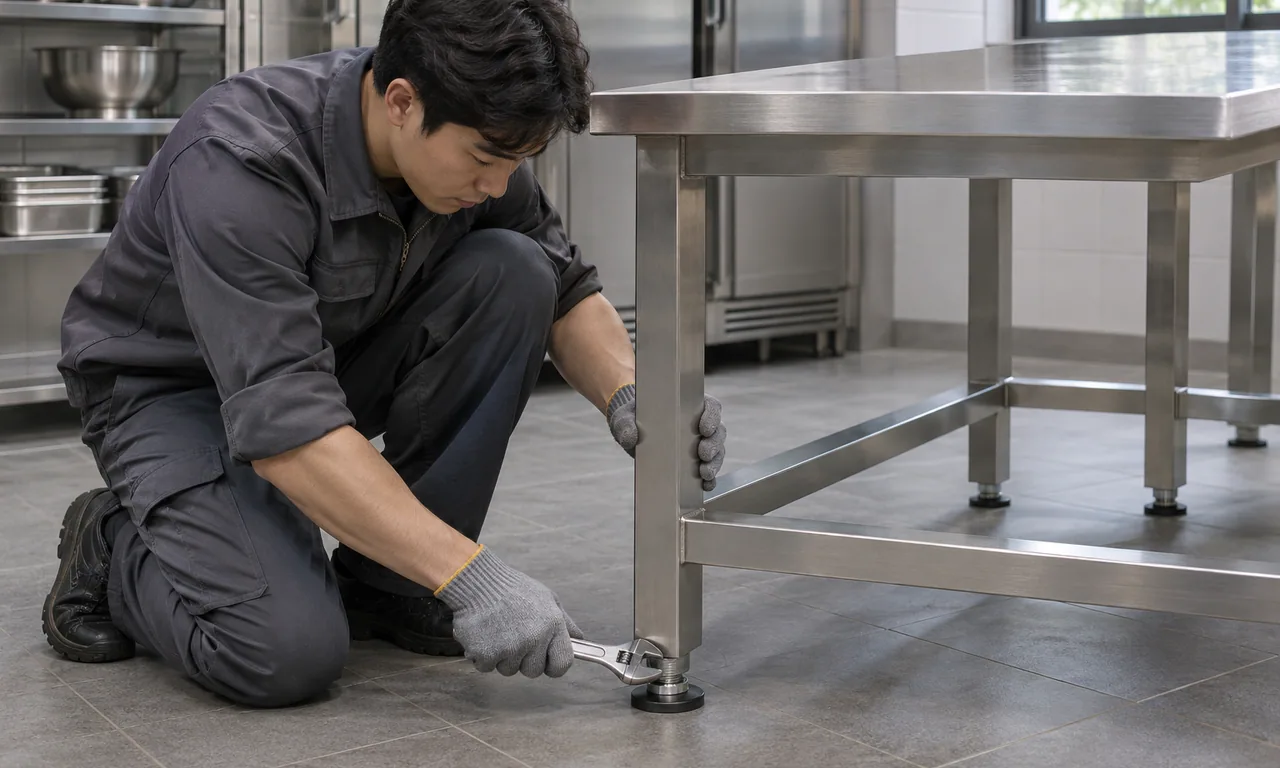
When the station is clear, check that each foot bears on the floor. A wobble may come from an unlevel surface, a loose connection or a bent component. Look at the frame, shelves and braces before adjusting the feet. Follow the assembly instructions for fasteners and replace damaged hardware with compatible parts. A table that has been moved deserves a new stability check before heavy equipment goes back on it.
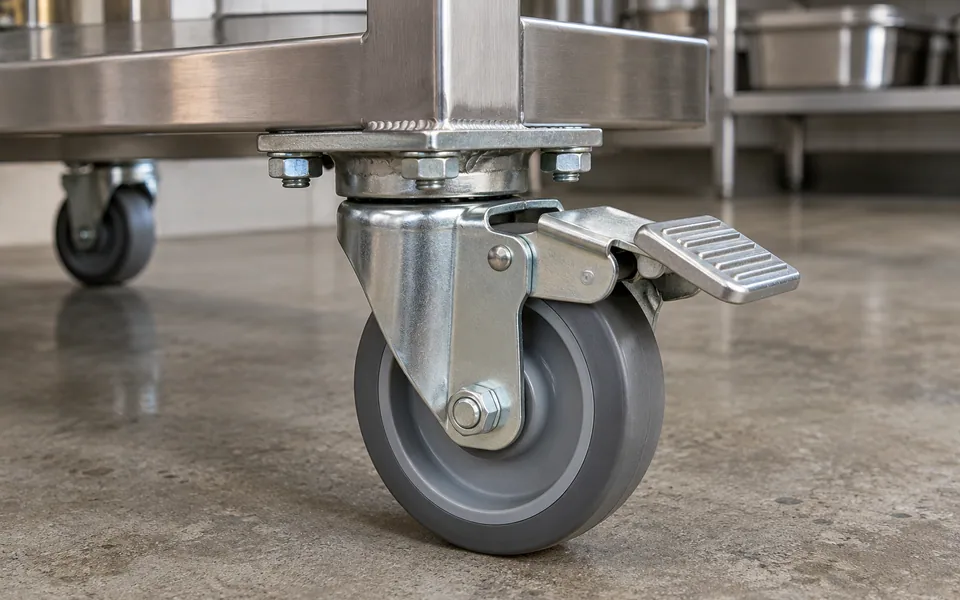
For a mobile unit, inspect the caster mounts and locks. Remove debris that interferes with movement using the approved maintenance method. Observe whether wheels track properly when unloaded. If a caster or mount is loose, isolate the table from use until the issue has been assessed.
Track damage before it spreads
During scheduled cleaning, look for dents, sharp edges, persistent discoloration and cracks near joints. Note where the change occurred and whether it affects use or cleaning. If a mark does not lift during the normal cleaning routine, record which products have already been used and ask the supplier to identify a suitable treatment.
Periodically review what workers actually put on the station. A new mixer, heavier trays or a change in cleaning chemicals can change the conditions the table was purchased for. Confirm any change that could exceed the approved use, and keep the maintenance record with the equipment.
Keep a spare-parts list with the table record so maintenance staff can identify the correct feet, fasteners and casters without relying on appearance.